Same Diamond, Different Birthplace: What Cartier Won’t Tell You About Lab-Grown
Disclosure: This post contains affiliate links to Anjay’s Designs; we may earn a commission at no extra cost to you. We have affiliated with Cartier. Prices are current as of publish and change over time — please confirm on the retailer’s site before buying.
Part of our Diamond Alternatives series start here: [Best Natural Diamond Alternative: Moissanite or Lab Diamond?]
From the first Pinterest board to the final purchase, almost every engaged couple faces the same question: must we mine a diamond from the earth to make it real? For most of the last century, the jewelry industry answered that question for you. It didn’t have to argue the point — it just never offered an alternative. Now that it does, the question is worth asking properly.
What “Lab-Grown” Actually Means
A lab-grown diamond isn’t a diamond simulant like cubic zirconia or moissanite. It’s grown using one of two methods — HPHT (high pressure, high temperature) or CVD (chemical vapor deposition) — that recreate the same conditions under which diamonds form underground, just inside a controlled chamber instead of the earth’s mantle. The result is the same carbon crystal lattice, the same hardness, the same fire and brilliance. A trained gemologist cannot tell a lab-grown diamond apart from a mined one without specialized equipment designed specifically to detect trace growth patterns.
Independent labs like IGI grade lab-grown diamonds on the exact same 4C scale — carat, clarity, color, cut — used for mined stones, and the certificate states the origin explicitly. The one meaningful difference isn’t in the stone itself. It’s in how long it took to form (weeks versus roughly a billion years) and where it sits in the supply chain before it reaches you.
The Cartier Case: What the Premium Actually Buys
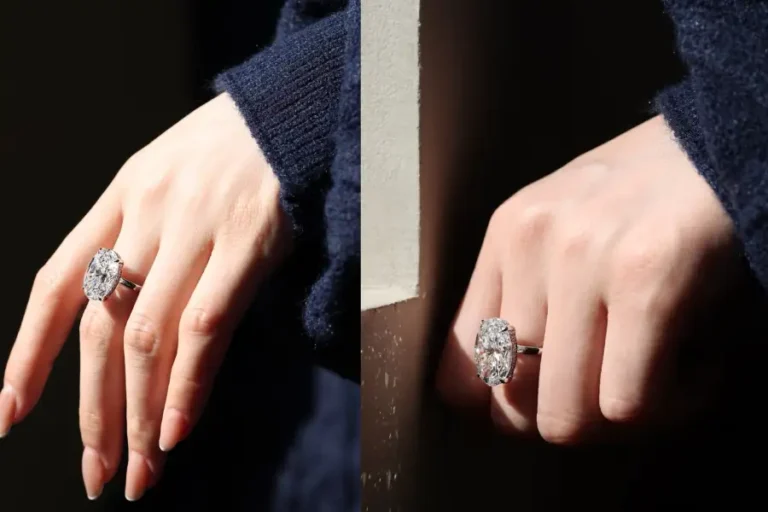
Cartier’s Solitaire 1895 defines the industry’s reference point for a classic engagement ring — a single round brilliant diamond set atop a tapered platinum band, unchanged in design since 1895. New from Cartier, pricing starts around $6,500 for a 0.30ct stone, climbing well into five and six figures as carat weight and quality increase.
Using the same three-layer framework we’ve applied to Cartier before — metal, stone, brand — the stone here is the layer worth isolating. A meaningful share of that price reflects the diamond’s natural origin: geological scarcity, a supply chain that runs through mining, cutting houses, and auction-grade sourcing, plus the resale infrastructure built around that provenance. None of that makes the mined stone “better” in any measurable, gemological sense. It makes it differently sourced — and that sourcing is a real value driver for buyers who care about it, the same way a vintage watch movement matters to a certain kind of collector even when a modern movement keeps better time.
Meet the Alternative: Anjay’s Designs
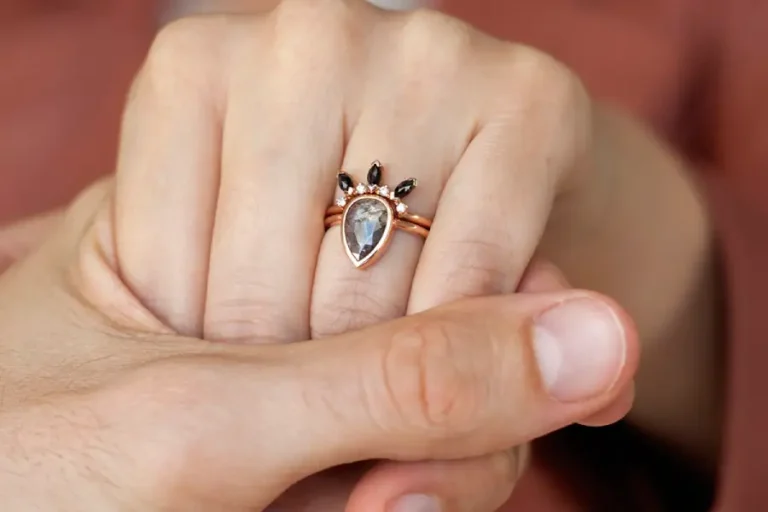
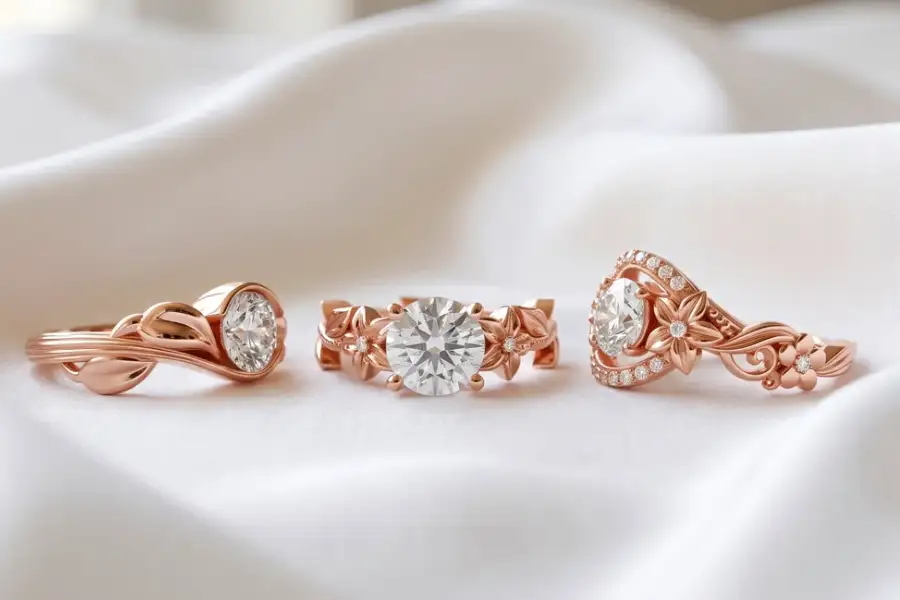
From the LA Jewelry District, Anjay runs a studio that designs, makes, and ships engagement rings and bands. The core material is IGI-certified lab-grown diamonds, set into nature-inspired and Celtic-style designs — florals, leaves, rope detailing, knotwork — rather than a single house-owned icon repeated across every collection. Rings start around $375.
The maker-to-couple relationship is itself a point of difference. A Cartier ring passes through a Maison’s atelier system — skilled, but anonymous at the level of the individual buyer. An Anjay’s ring has one identifiable person standing behind it, from sketch to shipping label.
Side-by-Side: What Each Buyer Is Actually Choosing
| Cartier Solitaire 1895 | Anjay’s Designs | |
|---|---|---|
| Diamond origin | Mined | Lab-grown |
| Certification | GIA / independent labs | IGI |
| 4C grading | Yes | Yes |
| Design language | House-owned icon setting | Nature-inspired, Celtic-style, custom |
| Who makes it | Maison ateliers | Founder-made, single studio |
| Starting price | ~$1000 | ~$375 |
Read the table as a decision, not a verdict. If provenance, geological rarity, and Cartier’s resale heritage matter most to you, the natural stone is buying you something real. If you want the same visual and physical diamond experience — same sparkle, same hardness, same certification process — at a fraction of the cost, the difference in price is budget you get to spend somewhere else: a larger stone, the honeymoon, the venue.
Inside Anjay’s Design Language: The Collections That Define the Brand
Unlike a Maison that repeats one owned icon across every price point, Anjay’s Designs organizes its work around a handful of recurring design families — each drawing on a symbol or motif that existed long before the brand did, rather than one the brand invented and now owns.
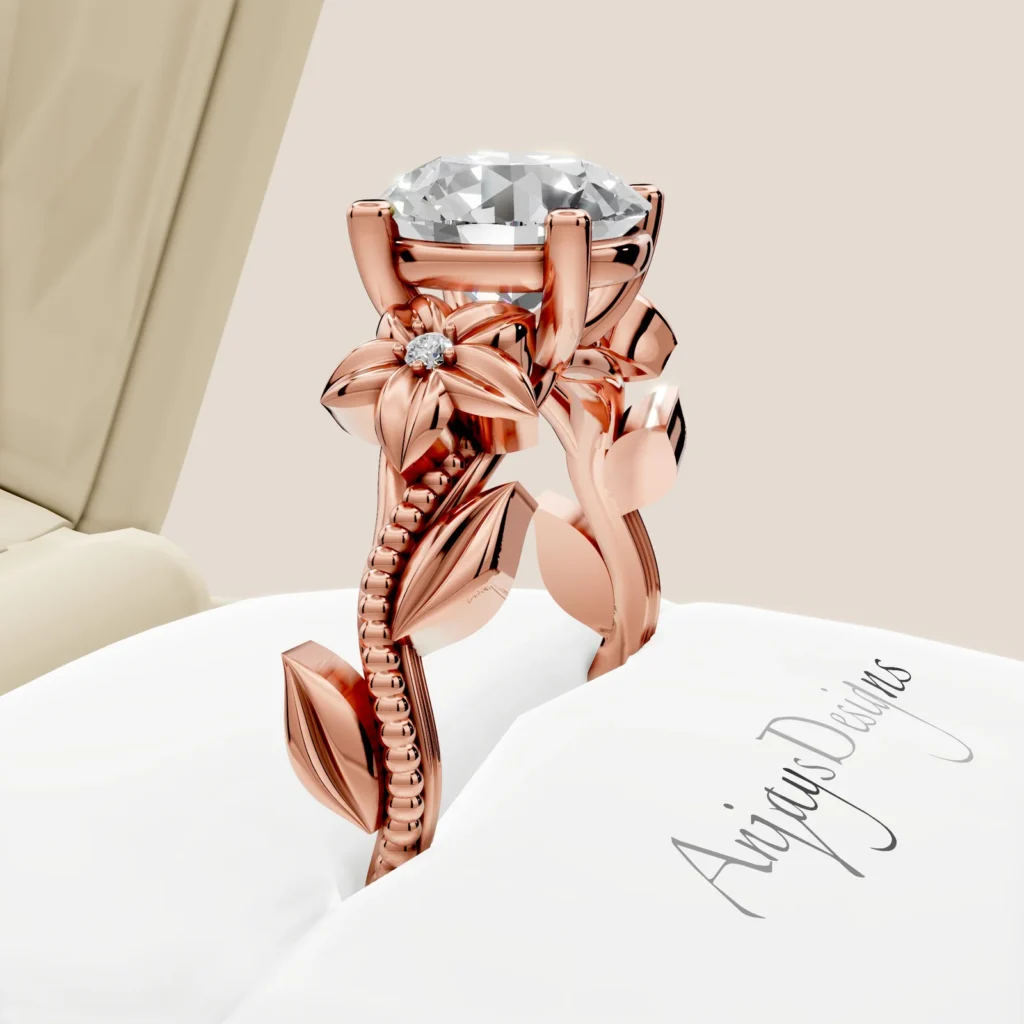
Nature-inspired settings (Flower & Leaf). The most recognizable thread running through the collection is botanical: leaf-wrapped bands, floral clusters framing the center stone, and vine-like details that curve around the finger rather than sitting in a rigid, geometric mount. These designs lean into asymmetry and organic movement — a deliberate departure from the perfectly symmetrical solitaire that defines most bridal collections.
Celtic-style knotwork. A second recurring family draws on Celtic knot and rope-twist motifs — interlocking bands and woven patterns that carry centuries of symbolism around eternity and unbroken connection, independent of any single jewelry house’s branding. For couples drawn to heritage and meaning but not necessarily to a specific Maison’s history, this is often the closest match.
Rope and twist detailing. A related but distinct line uses rope-inspired texture as a structural element rather than a decorative one — twisted metal shanks, braided bands, and nautical-adjacent detailing that reads as more textural and tactile than a polished, mirror-finish setting.
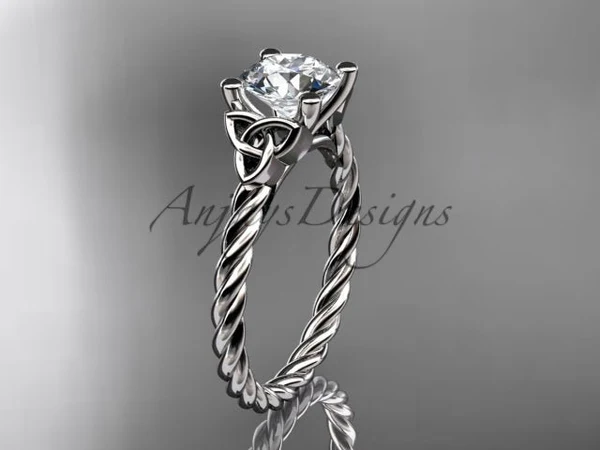
Across every one of these lines, the constant is the certification: each stone is IGI-graded and identified as lab-grown, and the setting is designed, produced, and shipped from a single studio rather than a multi-country supply chain. The variety sits in the symbolism, not in the sourcing. See more styes at Anjays Designs.
The Honest Trade-Offs
Resale value. Natural diamonds, especially branded ones like Cartier’s, currently hold a stronger secondary market. Lab-grown diamonds are newer to resale channels, and as production scales, their prices have been falling — which is good news for buyers, less so for anyone treating the ring as an investment.
Emotional weight. Some people feel that “as old as the earth” is part of what an engagement ring is supposed to mean. That’s a legitimate preference, not a factual claim about quality — and it’s worth being honest with yourself about which one you’re actually weighing.
Price trajectory. Lab-grown diamond prices have dropped meaningfully over the past several years as manufacturing has matured. That cuts both ways: more accessible now, but a less “fixed” value story than a natural stone’s.
A Practical Note Before You Buy Lab-Grown
Always ask for the certification report and confirm it explicitly states “laboratory-grown” — any reputable seller provides this without being asked. Compare cut quality across sellers the same way you would with a mined stone; origin doesn’t replace the 4Cs. And if personalized design matters to you, ask whether the setting can be customized — this is where a small studio has a real edge over a fixed collection line.
The Bottom Line
The diamond isn’t the variable here. The origin, the maker, and the story wrapped around the stone are. Buy the diamond that matches what you actually value — not the one a century of marketing has told you is the only “real” one.
Which would you choose — the Maison or the maker? Tell us in the comments.